





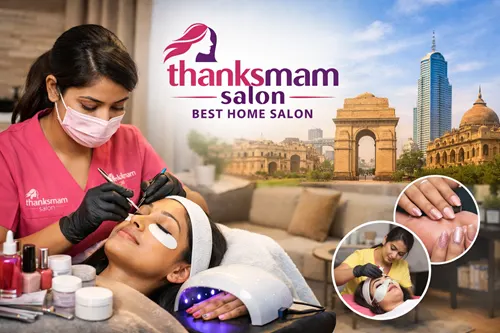
The Indian beauty and wellness industry is undergoing a quiet but significant transformation. Once dominated by neighborhood salons and large commercial chains, the sector is increasingly adapting to consumer demand for convenience, hygiene, and personalized care. One of the noticeable outcomes of this shift is the growing popularity of salon-at-home services. Among the newer companies operating in this space is Thanksmam Salon – Best Home Salon, a Greater Noida–based startup founded in October 2024.
- Changing Consumer Habits Post-Pandemic
- Foundation and Early Operations
- Services Designed for Home Delivery
- Geographic Expansion Across North India
- Milestones and Customer Reach
- Position Within a Competitive Market
- Employment and Skill Utilization
- Digital Presence and Customer Engagement
- Challenges Facing Salon-at-Home Startups
- A Snapshot of an Evolving Industry
Though still in its early stages, Thanksmam Salon offers insight into how small, service-focused companies are responding to changing customer expectations in urban and semi-urban India.
Changing Consumer Habits Post-Pandemic
Over the past few years, consumers have shown a clear preference for services that minimize travel, reduce waiting times, and allow greater control over personal environments. Beauty and grooming services, once considered inseparable from physical salon visits, are now increasingly being delivered at home.
Industry observers note that salon-at-home services appeal especially to working professionals, young parents, senior citizens, and customers who prioritize privacy and hygiene. The trend has accelerated further as digital booking systems and trained mobile professionals make home services more accessible.
Thanksmam Salon entered the market against this backdrop, positioning itself within the beauty and wellness sector as a provider of professional salon services delivered directly to customers’ homes.
Foundation and Early Operations
Thanksmam Salon was established on 12 October 2024 and is headquartered in Greater Noida. The company was founded by Preeti Kumari, who conceptualized the brand around the idea of combining professional salon expertise with home-based convenience.
According to company information, the initial focus was on building operational systems rather than rapid expansion. This included identifying trained beauty professionals, standardizing service procedures, and creating internal guidelines around hygiene and customer interaction.
Within its first year, the company assembled a team of around 40 employees, including beauticians and technical specialists trained in specific beauty treatments.
Services Designed for Home Delivery
Unlike traditional salons that depend on walk-in traffic, salon-at-home brands must adapt their offerings to suit mobile delivery. Thanksmam Salon’s service portfolio reflects this operational reality.
The company offers a mix of routine and advanced beauty services, including:
- Nail extensions and nail art
- Eyelash extensions
- Facials and hydra facials
- Waxing, threading, cleanup, and other grooming services
These services are delivered using branded beauty products and portable equipment suitable for home use. The company states that service professionals follow hygiene protocols such as tool sanitization and the use of disposable items where required.
Experts point out that such standardization is critical in the salon-at-home segment, where customer trust is closely tied to cleanliness and professional conduct.
Geographic Expansion Across North India
In less than a year, Thanksmam Salon expanded beyond its base in Greater Noida. The company currently offers services across multiple cities, including Noida, Delhi, Gurgaon, Faridabad, Ghaziabad, Jaipur, and Lucknow.
This expansion highlights a broader trend: the demand for at-home beauty services is not limited to major metros alone. Tier-2 cities such as Jaipur and Lucknow are showing increasing adoption, driven by growing awareness and changing lifestyles.
However, industry analysts caution that geographic expansion also brings challenges, including managing logistics, maintaining service quality, and ensuring uniform customer experience across locations.
Milestones and Customer Reach
One of the key milestones reported by Thanksmam Salon is its client base. Within its first year of operations, the company claims to have served between 1,500 and 2,000 customers across its service cities.
While these numbers may appear modest compared to large app-based platforms, they reflect steady growth for a young, independently operated service brand. Analysts often view such organic growth as a positive indicator in service-led businesses, where customer satisfaction and repeat usage matter more than rapid scaling.
Position Within a Competitive Market
The salon-at-home segment is becoming increasingly competitive. Customers today can choose between individual freelancers, local salons offering home visits, and large digital platforms aggregating beauty professionals.
Thanksmam Salon operates in this crowded environment by focusing on consistency and professional presentation rather than aggressive promotions. The company emphasizes punctuality, trained staff, and structured service delivery as distinguishing factors.
Industry experts note that smaller brands often succeed in this space by building strong local reputations, especially in residential communities where word-of-mouth recommendations remain influential.
Employment and Skill Utilization
Beyond consumer convenience, salon-at-home models also impact employment patterns in the beauty industry. Traditional salons typically require fixed working hours and physical presence, which may not suit all professionals.
Thanksmam Salon’s operational model allows beauty professionals to work on scheduled appointments across different locations. This flexibility can be particularly beneficial for skilled workers seeking non-traditional employment arrangements.
The company reports ongoing internal training to ensure service professionals remain updated on beauty techniques and hygiene standards.
Digital Presence and Customer Engagement
Like most modern service businesses, Thanksmam Salon maintains an online presence through its official website and social media platforms, including Instagram, LinkedIn, and YouTube. These platforms are used primarily to share service information, educational content, and customer interactions.
While the brand has not yet received major awards or featured prominently in mainstream media, its growing digital footprint reflects an effort to build credibility and transparency in a trust-driven industry.
Challenges Facing Salon-at-Home Startups
Despite growing demand, salon-at-home businesses face several structural challenges. Scheduling inefficiencies, travel time between appointments, and workforce retention can impact profitability and service reliability.
Additionally, customer expectations tend to be high, as consumers often compare home services directly with premium salon experiences. Any inconsistency in service quality can affect brand perception quickly.
Industry analysts suggest that long-term sustainability in this sector will depend on backend technology, quality control mechanisms, and the ability to adapt services based on customer feedback.
A Snapshot of an Evolving Industry
Thanksmam Salon’s journey, though still at an early stage, offers a snapshot of how India’s beauty and wellness industry is evolving. The shift from physical salons to home-based services reflects broader changes in how consumers value time, comfort, and personal safety.
Whether companies like Thanksmam Salon grow into large multi-city operations or remain focused regional players, their presence signals a lasting change in service delivery models.
As urban lifestyles continue to evolve, salon at home services are likely to become a permanent feature of India’s beauty ecosystem—reshaping not only how services are delivered, but also how professionals and customers interact within the industry.